

Car Key Locksmith Near Me — Fast, Local Key Replacement & 24/7 Emergency Service
When you’re stranded or need a replacement key quickly, clear expectations and local know‑how make all the difference. This guide walks Wilmington drivers through how automotive key replacement and emergency locksmith services work, what key types technicians can handle, and practical steps to fix lost, broken, or malfunctioning keys. You’ll get plain explanations of traditional, transponder, fob, and smart keys, an overview of on‑site programming and testing, and price ranges typical for Wilmington. We also cover common lockout scenarios and safe, non‑destructive solutions, and explain how mobile 24/7 service gets you back on the road faster than towing to a dealership. A transparent pricing guide and concise FAQs help you act quickly and confidently when time matters.
Why Choose Our Wilmington DE Car Key Locksmith Services?
Local mobile locksmiths deliver fast access and replacement by combining non‑destructive entry techniques with on‑site cutting and secure key programming. Sending equipment and trained technicians to your location cuts wait time and avoids towing — which saves time and money. A provider with certified tools and diagnostic skill will work safely with immobilizer systems and get you a working key sooner. Knowing these practical benefits helps you decide to call a mobile locksmith instead of the dealership or a tow truck.
Tiger Locksmith serves Wilmington with 24/7 mobile response, experienced technicians, and a current 10% discount on qualifying services. Below are the main reasons many drivers prefer mobile locksmiths.
- Faster on-site response — we come to your vehicle and work there.
- On-site cutting and programming — keys made and paired without towing.
- Lower overall cost — mobile pricing usually undercuts dealership fees.
- Non‑destructive entry — trained technicians minimize vehicle damage.
Those advantages cut stress and delay when you’re locked out or need a replacement. The next section explains the key types we commonly replace and program.
What Makes Our Automotive Locksmith Solutions Reliable and Affordable?
Reliability starts with training, certified programming tools, and a clear diagnostic workflow that separates mechanical problems from electronic faults. Mobile operations keep overhead low, so we can offer on‑site replacements at lower cost than many dealerships. Technicians carry common key shells, transponder chips, fob batteries, and diagnostic interfaces to handle most modern vehicles and often resolve issues in a single visit. When you compare mobile pricing to dealer quotes — and factor in towing and time — the savings add up.
Those operational strengths translate into a faster recovery and a lower bill, which matters most in emergencies.
How Does Our 24/7 Mobile Service Benefit Wilmington Drivers?
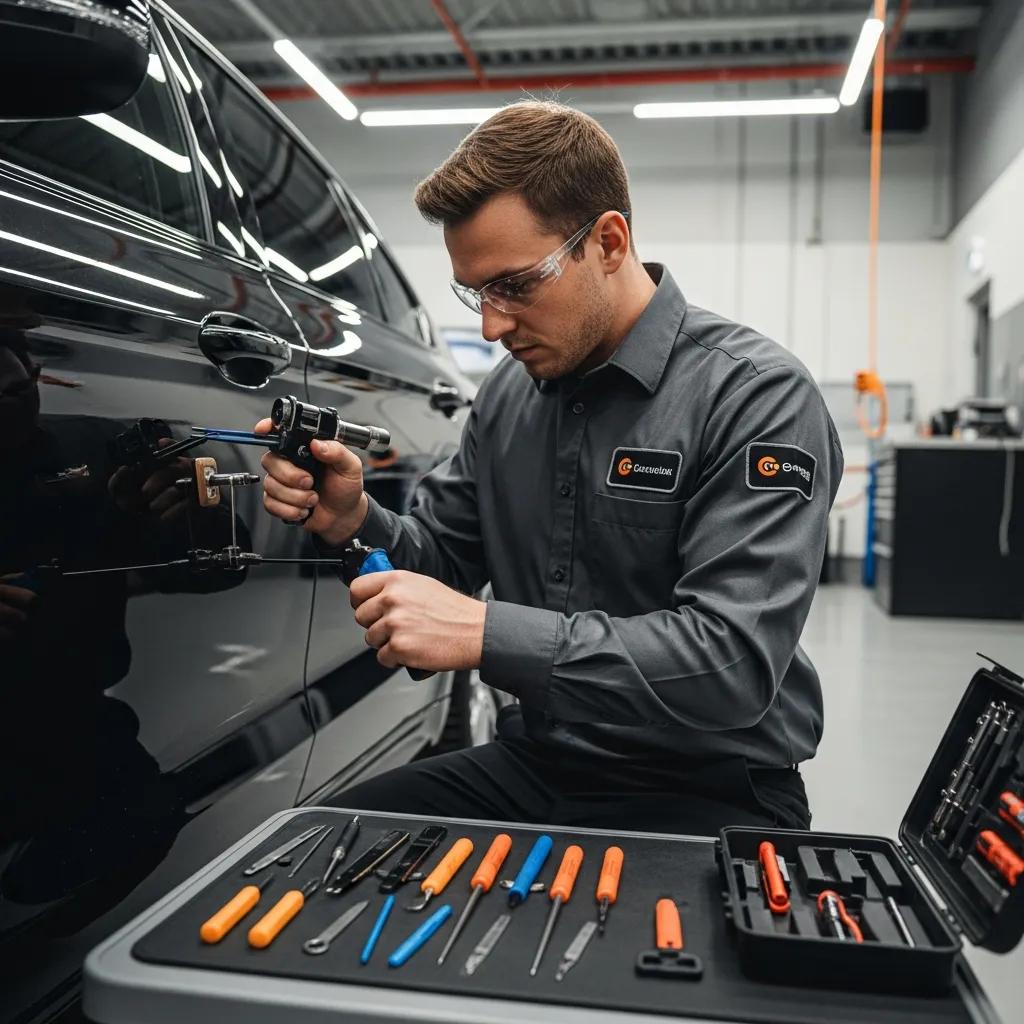
Having a mobile locksmith available 24/7 means you can solve lockouts and key failures at night, on weekends, or during holidays without long delays. Our vans are equipped to cut keys, program transponders via OBD or direct module access, and extract broken keys so you can avoid towing and multiple dealer trips. Because we test new keys at the vehicle — checking ignition and remote functions before we leave — you get a complete solution on the spot. Handling everything at your location reduces downtime and gets you moving again faster.
Since lockouts happen unexpectedly, a reliable mobile option removes uncertainty and logistical headaches. Next, we’ll classify the key types we service most often.
What Types of Car Keys Can We Replace and Program?
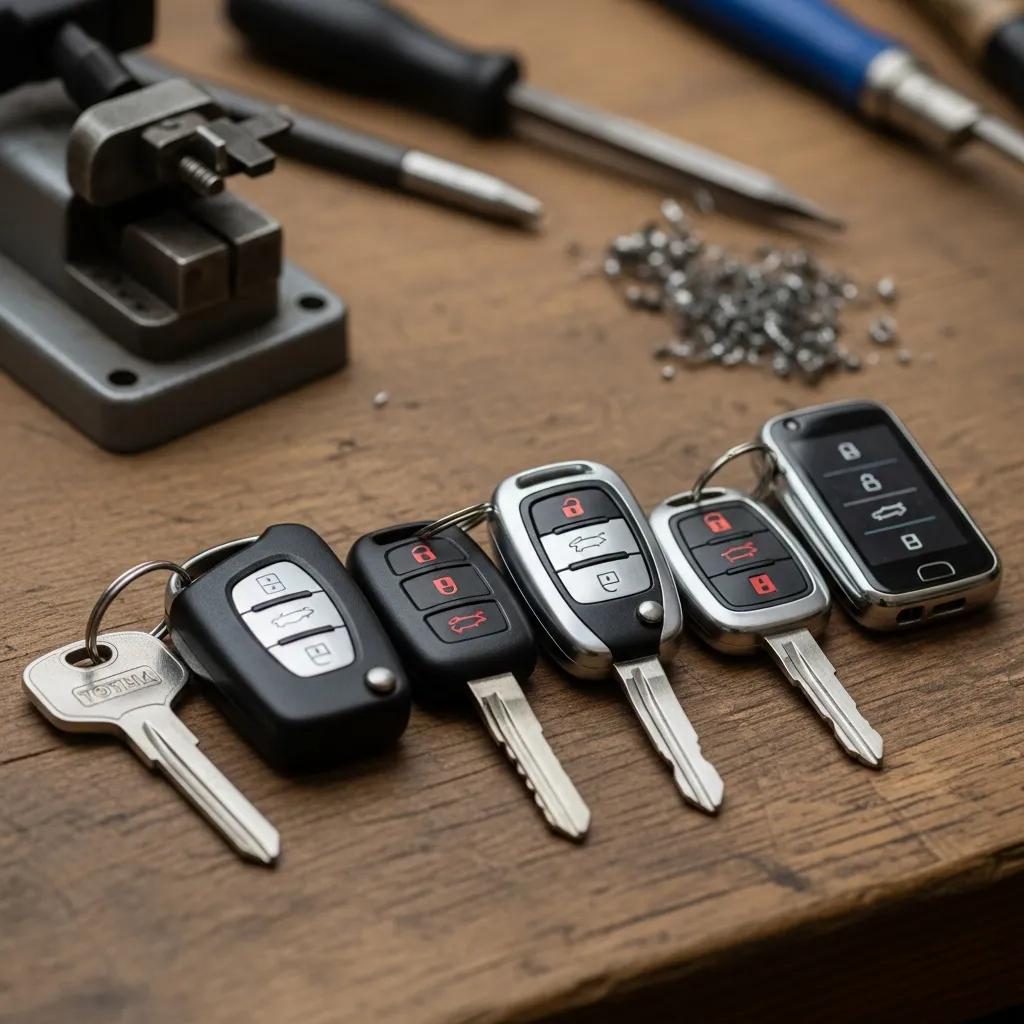
Keys range from simple mechanical blades to advanced smart keys with proximity systems, and each type needs a different toolset. Traditional keys are cut to match a mechanical pattern. Transponder keys include an embedded chip that must be paired electronically. Fobs and smart keys add RF and proximity features that can require module‑level programming. That’s why some replacements are quick and inexpensive while others take more time and diagnostics. The table below compares common key types by technology, on‑site complexity, and typical cost ranges in Wilmington.
Quick comparison of common key types and what they commonly require on-site:
| Key Type | Technology | Typical On-Site Complexity | Typical Cost Range |
|---|---|---|---|
| Traditional key | Mechanical blade only | Low — cut on‑site with key cutting machine | $20–$80 |
| Transponder key | Mechanical blade + RFID chip | Medium — requires programming with diagnostic tools | $120–$350 |
| Key fob / Remote head | Remote RF with buttons | Medium — replacement and syncing required | $100–$400 |
| Smart key / Push-to-start | Proximity, encrypted RF, immobilizer | High — module programming and pairing often required | $250–$800+ |
This shows why technicians carry both cutting and programming gear and why time and price vary by key technology. The sections below explain the differences and what they mean for you.
What Are Key Fobs, Smart Keys, and Push-to-Start Systems?
Key fobs use button‑activated RF signals to lock/unlock doors and sometimes start the car remotely. Smart keys and push‑to‑start systems use proximity sensors and encrypted RF exchanges with the vehicle’s immobilizer and convenience modules, which adds security and programming complexity. Replacing a fob can be as simple as a battery swap or reprogramming; replacing a full smart key usually requires module‑level pairing and can take more time. Minor fob fixes are often quick and economical; full smart‑key replacements are costlier because they involve both hardware and secure programming.
As keyless systems get more sophisticated they also present new security challenges — recent research summarizes common attack methods and defenses.
Keyless Entry System Security: Attacks & Defense Technologies
A 2024 review that surveys known attack techniques against keyless entry systems and the current defensive approaches. The paper summarizes how attacks work, their impact, and the strengths and limits of available countermeasures to help inform better protection strategies.
Automotive security in the digital era: A comprehensive survey of attacks and defenses for keyless entry system, 2024
Knowing these functional differences sets realistic expectations for on‑site time and pricing. Next, we’ll walk through the replacement process step by step.
How Does the Car Key Replacement Process Work?
Replacement starts with a quick intake that records the vehicle identification and proof of ownership. On arrival, the technician diagnoses whether the job needs cutting, programming, or broken‑key extraction. They inspect the lock and ignition, pick the correct blank or fob, cut the blade if needed, program the chip or fob via OBD or vehicle‑specific procedures, and run safety checks to confirm ignition and remote functions. This stepwise approach reduces errors and ensures you leave with a working key.
Here’s a concise checklist of the typical workflow and expected time for common scenarios.
- Provide vehicle info and proof of ownership to the dispatcher.
- Technician performs on‑site diagnostics to identify key type and access method.
- Technician cuts the mechanical key or prepares and programs the transponder/fob.
- Technician tests the new key for ignition start, remote functions, and locks before handing it over.
To make timing clear, the table below maps each step to typical times you can expect.
| Step | Action | Typical Time |
|---|---|---|
| 1 | Intake: VIN, location, ownership verification | 5–10 minutes |
| 2 | Diagnostics: identify key type and module access | 10–20 minutes |
| 3 | Key cutting and programming | 20–60 minutes |
| 4 | Testing and confirmation | 5–15 minutes |
When Tiger Locksmith arrives, the technician will confirm vehicle details and ownership, explain the recommended steps, and perform cutting and programming on site while keeping you informed. They’ll test the new key for ignition and remote features before they leave and can offer advice on spare keys or battery replacement.
Next we cover common scenarios and how technicians typically resolve them.
What Are the Steps for Lost or Broken Key Replacement?
If a key is lost or broken in a lock, start by making sure everyone is safe and the vehicle is secure, then gather the VIN and proof of ownership. After verifying ownership, the locksmith will decide whether you need a simple mechanical cut, a transponder programmed, or a matched fob/smart key ordered. If a broken key is stuck in a lock or ignition, the technician will extract it with specialized tools before cutting or programming a replacement to avoid internal damage. Having VIN and ownership documents ready shortens service time and helps avoid repeat trips.
Preparing those documents before the technician arrives usually speeds the job and can reduce cost.
How Do We Program and Test New Car Keys On-Site?
On‑site programming uses commercial diagnostic interfaces and OBD connections or vehicle‑specific procedures to pair transponder chips and fobs with the car’s immobilizer and convenience modules. Technicians run programming sequences or access modules to write the key code securely, then verify the pairing by starting the engine and testing remote functions. A final checklist confirms door locks, trunk release, panic button behavior, and ignition response. Technicians also check for any diagnostic trouble codes created during programming and ensure the immobilizer status is normal.
This programming and testing routine makes sure a new key is fully integrated with the vehicle’s electronics and prevents follow‑up failures.
What Are Common Car Lockout Scenarios and Solutions?
Frequent lockout situations include leaving keys inside a locked car, snapping a key in the ignition or door, losing keys entirely, and electronic failures where fobs or immobilizers don’t communicate. Each problem has a typical remedy: non‑destructive entry for locked‑in cases, broken‑key extraction and replacement for snapped blades, and reprogramming or fob replacement for electronic faults. Understanding these causes helps you choose the fastest, least expensive fix and avoid unnecessary towing or dealer trips. The list below shows common scenarios and immediate locksmith responses.
- Locked keys inside vehicle: non‑destructive entry to retrieve keys without damage.
- Broken key in lock or ignition: targeted extraction followed by replacement and programming.
- Lost keys with a working immobilizer: create and program a new transponder key on site.
- Fob or smart key failure: diagnose RF or module issues, then reprogram or replace as needed.
These scenario‑to‑solution mappings help drivers pick the right option quickly. Below we explain entry and extraction methods in more detail.
How Can a Locksmith Help When You’re Locked Out of Your Vehicle?
For a lockout, a locksmith uses non‑destructive tools — wedges, long‑reach tools, air wedges, and shielded unlock tools — to manipulate locks without harming weather seals or electronics. Technicians inspect the door and lock type first to pick the safest entry method and avoid expensive repairs. For modern cars with complex electronics, they choose techniques that won’t interfere with immobilizers or airbags. Entry is usually faster and cheaper than towing; technicians aim to complete the job quickly while minimizing cosmetic or mechanical impact.
After entry, the locksmith can also recommend or make a spare key or replace a failing fob to prevent future lockouts.
What Emergency Services Are Available for Lost Car Keys in Wilmington?
Emergency mobile locksmith services in Wilmington include on‑site key cutting, transponder and fob programming, broken‑key extraction, and immediate lockout assistance — available 24/7. These services are designed to get you back on the road quickly by avoiding tow‑in delays and handling both mechanical and electronic issues at the vehicle. Emergency calls focus first on diagnostics to find the quickest resolution — retrieval, extraction, or full replacement — and technicians carry common blanks and programming tools for most makes and models. A current 10% discount applies to qualifying services, which can lower your out‑of‑pocket cost in urgent situations.
Knowing emergency providers handle both mechanical and electronic fixes makes choosing a mobile locksmith a faster, more convenient option than towing to a dealer.
How Much Does Car Key Replacement Cost in Wilmington, DE?
Cost depends on key technology, vehicle make and model, whether programming or module access is required, and parts availability. Mobile locksmiths usually charge less than dealerships because they avoid dealer overhead and towing. Mechanical duplicates are the cheapest; smart‑key replacements that need module pairing are the priciest. The table below gives Wilmington‑focused cost ranges and the main factors that drive each estimate.
Practical pricing guide for Wilmington drivers with typical ranges and common price drivers.
| Key Type | Typical Cost Range (Wilmington) | Factors That Affect Price |
|---|---|---|
| Traditional key | $20–$80 | Key blank availability; number of cuts required |
| Transponder key | $120–$350 | Programming complexity; vehicle year and make |
| Key fob / Remote | $100–$400 | Fob model; button functions; module access |
| Smart key / Push-to-start | $250–$800+ | Module pairing; dealer‑only protocols; parts cost |
This table clarifies why prices vary and helps you compare mobile locksmith options with dealer quotes. The following sections break down common price drivers and explain how our discount affects the total.
What Factors Affect Pricing for Different Key Types?
Price is driven by electronic complexity (transponder vs. smart key), whether OBD programming or dealer authorization is needed, parts costs for specific fob models, and the time required for extraction or module work. Older cars are often cheaper because key codes can be copied without complex pairing; newer vehicles frequently use encrypted protocols that take longer to program. Geography and emergency timing (late‑night or holiday calls) can also change the final price. Knowing these factors helps you decide between a spare mechanical key or investing in a more secure smart key replacement.
Understanding price drivers helps you make the choice that fits your budget and risk tolerance.
Can a Locksmith Make a New Car Key Without the Original?
Yes. We can make a new car key without the original using the vehicle identification number (VIN) and proof of ownership to cut and program a replacement. Technicians may retrieve key codes from the vehicle’s module, clone a transponder with diagnostic tools, or order a specific blank or fob when needed. Proof of ownership and VIN speed the process and are standard to prevent unauthorized key creation. This lets drivers without the original regain access efficiently.
Having VIN and ownership documents ready when you call reduces verification time and speeds the overall replacement.
How Long Does It Take to Replace or Program a Car Key?
It depends on the key: cutting a mechanical key usually takes 10–20 minutes, programming a transponder typically takes 20–60 minutes, and full smart‑key replacement with module pairing can take 45–90 minutes or longer depending on complexity. Extra time may be needed for broken‑key extraction or if a specific part isn’t carried on the truck. Preparing VIN, ownership proof, and the vehicle location ahead of time shortens the total elapsed time.
Good preparation and clear communication with the technician minimize delays and help resolve the issue faster.
Tiger Locksmith is ready to help Wilmington drivers who need immediate assistance. To request service call (302) 595-9850 or check our Google Business Profile for current reviews and availability. Call the number for direct help during emergencies or to schedule service.
Author: John Brighton, certified locksmith of 26 years


